
Siamak Aghaei (born 1961) & Colin Jacobsen (born 1978)
Ascending Bird (2007)
for strings and percussion
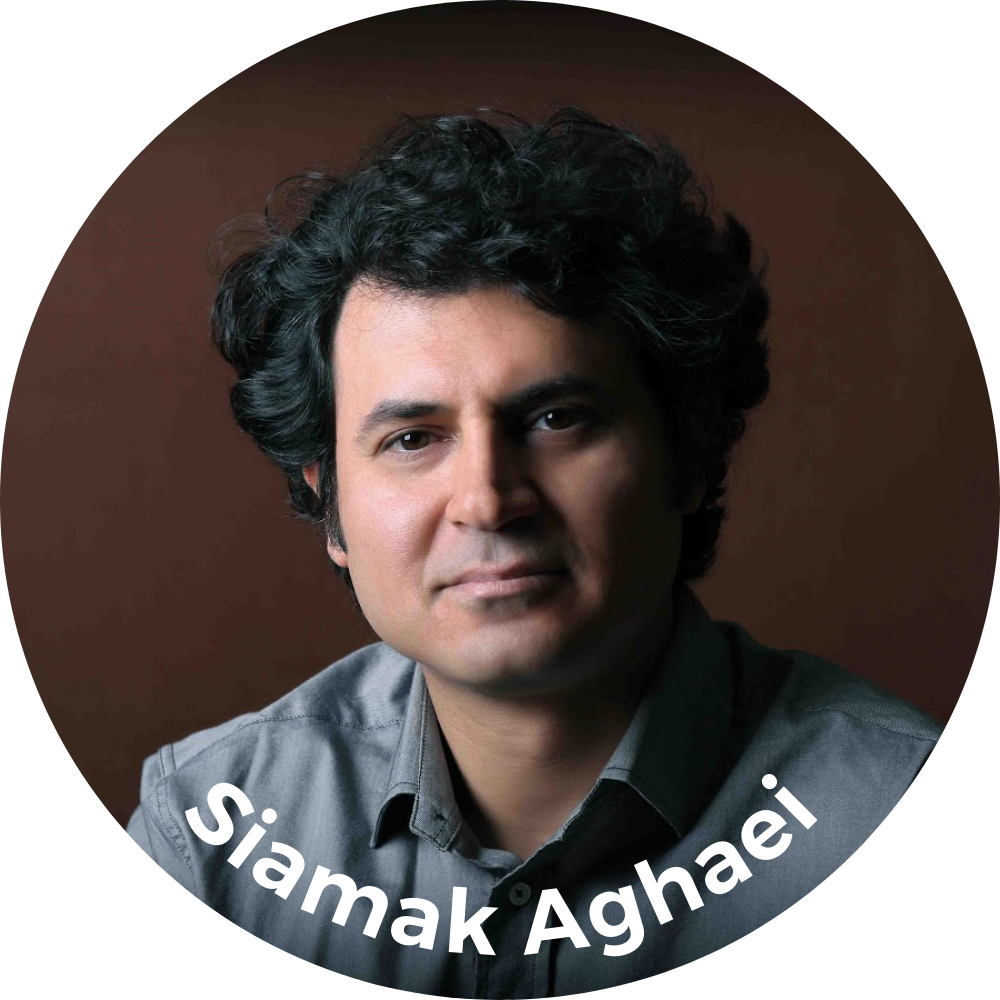
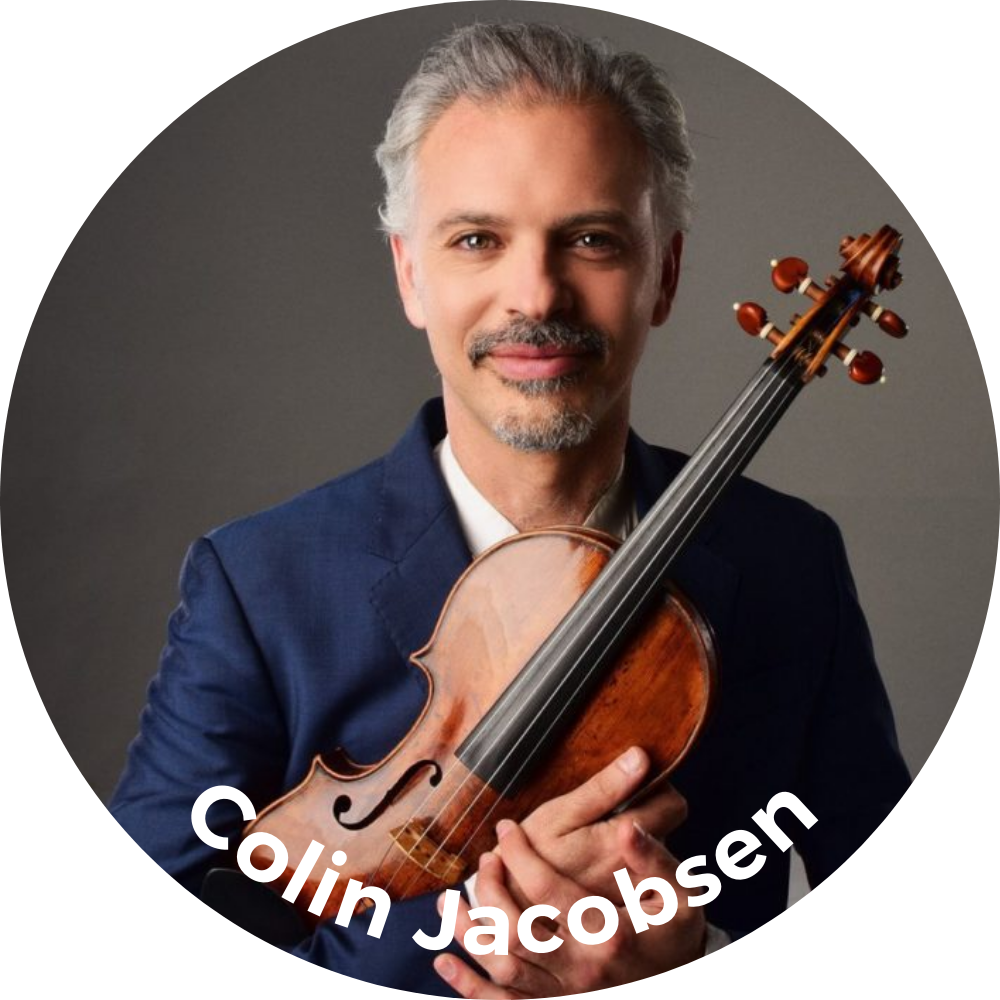
Ascending Bird is the result of a close collaboration between Iranian composer and santur (a hammered string instrument) virtuoso Siamak Aghaei and violinist‑composer Colin Jacobsen. Both artists are deeply engaged in musical traditions that cross cultural boundaries, and this piece reflects their shared interest in how different musical languages can meet and rise together.
The image of a bird in flight lies at the heart of the work. Repeating figures and gently shifting rhythms create a sense of motion and anticipation, as though the music itself is gathering strength. Strings and percussion interact closely, sometimes blending into a single texture and at other times pulling against one another to create tension and release.
A distinctive feature of the piece is the use of the cajón (pronounced ka-HONE), a box‑shaped percussion instrument played by leaning forward and striking its surface with the hands. Originating in Afro‑Peruvian music and now used around the world, the cajón can produce both deep, resonant bass tones and crisp, snare‑like sounds. Its earthy, physical presence gives the rhythm a grounded, human quality that blends naturally with the strings.
Aghaei’s influence is heard in the modal melodies drawn from Persian musical traditions, while Jacobsen’s background brings a clear sense of Western chamber structure. As the music unfolds, the energy gradually builds, leading to a feeling of openness and release. Ascending Bird leaves the listener with a sense of lift, transformation, and shared ascent.
George Gershwin (1898–1937)
Lullaby for Strings (1919)
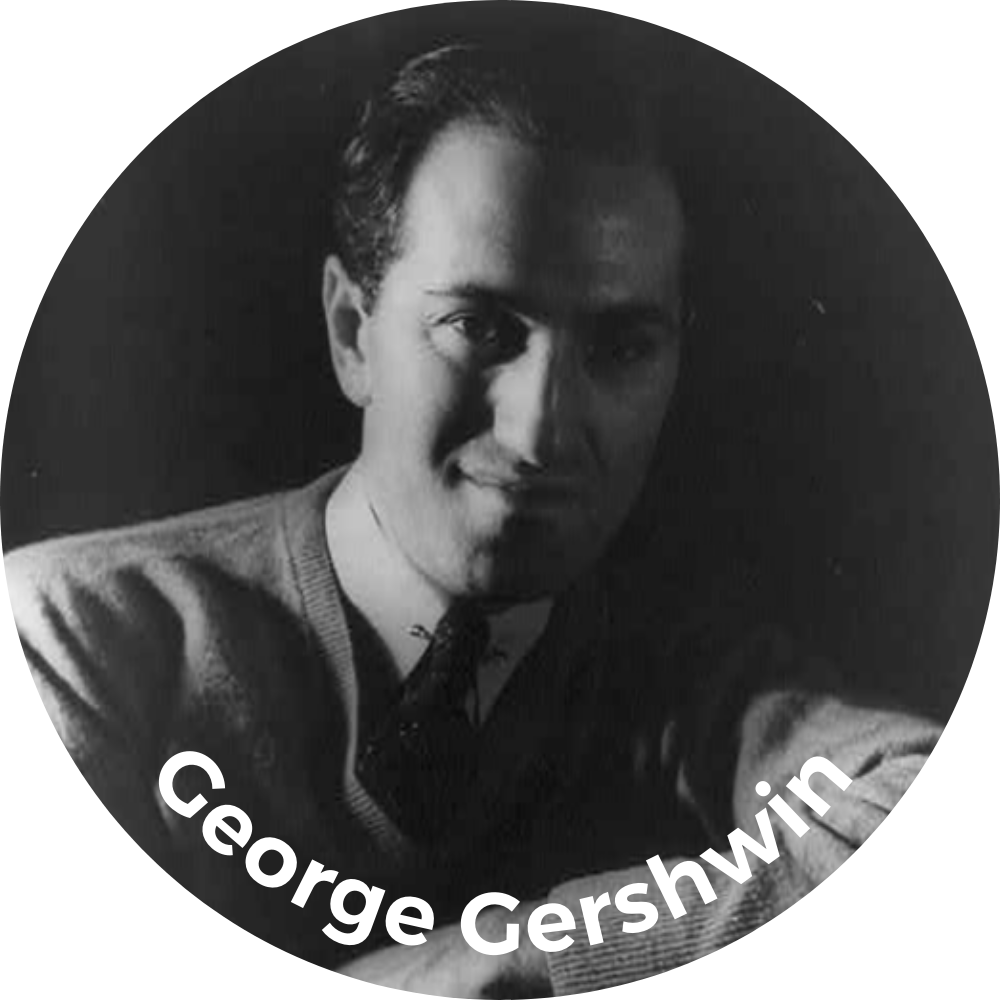
George Gershwin composed Lullaby for Strings in 1919, when he was just twenty‑one years old and still shaping his musical identity. Written as a string quartet exercise during his studies, the piece already reveals the melodic warmth and expressive ease that would later define his most famous works. Long before Rhapsody in Blue or An American in Paris, this gentle score shows a young composer listening closely to the singing possibilities of strings.
As its title suggests, Lullaby for Strings unfolds in a calm, unhurried flow. Long melodic lines pass tenderly from one voice to another, supported by rich but understated harmonies. There is no dramatic conflict here, only a quiet sense of reflection and ease. The music feels intimate and personal, as though overheard rather than proclaimed, inviting the listener into a moment of repose.
In its string orchestra form, the work takes on added warmth and depth. The expanded sonority allows the music to bloom while preserving its essential simplicity. Gershwin’s gift for melody is unmistakable, even without the jazz rhythms and syncopations that would later become his hallmark.
Lullaby for Strings reminds us that some of the most affecting music speaks softly. It offers a moment of calm following Ascending Bird, gently welcoming the audience into a shared musical space.
Valerie Coleman (born 1970)
Portraits of Langston (2007)
for flute, clarinet, piano, and narrator
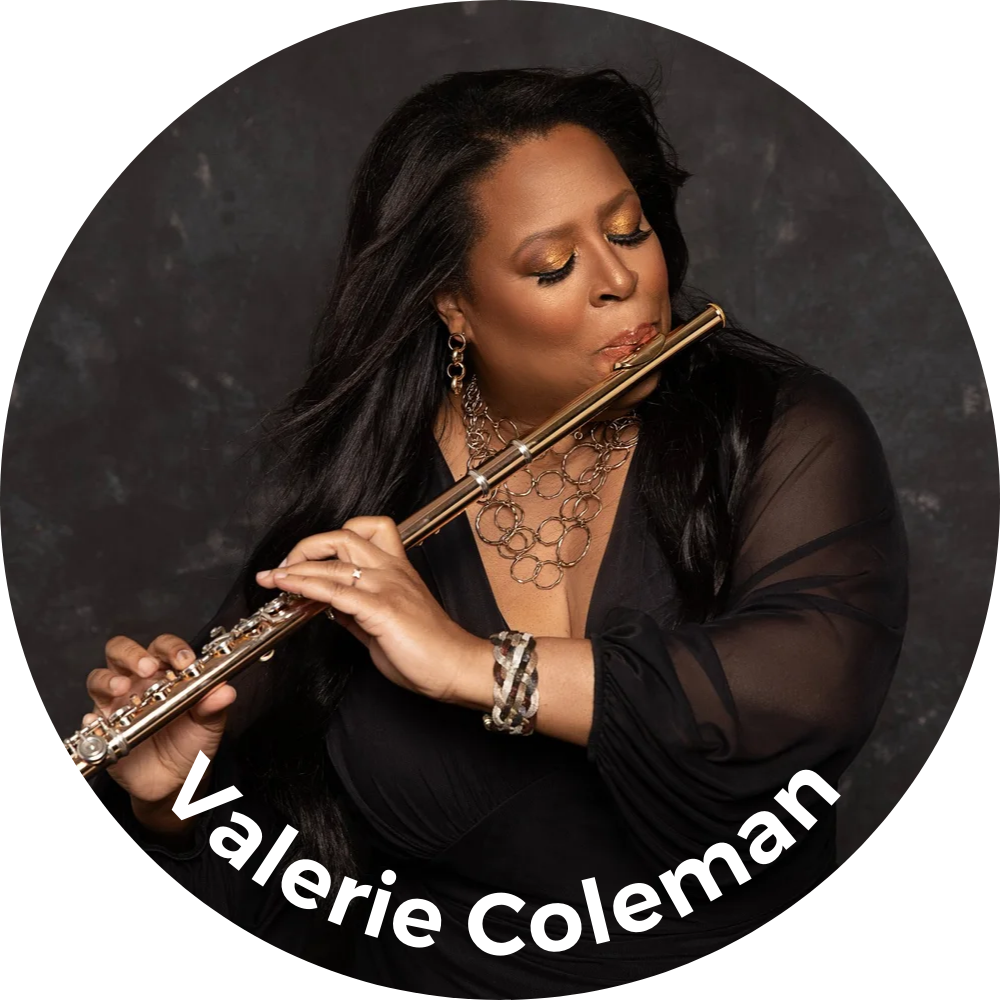
Valerie Coleman’s Portraits of Langston draws inspiration from the poetry of Langston Hughes, one of the defining voices of the Harlem Renaissance. Rather than setting Hughes’s poems as songs, Coleman creates musical responses that reflect their rhythm, imagery, and emotional depth. The result is a powerful dialogue between spoken word and instrumental sound.
Each movement is inspired by a different poem and captures a distinct mood. At times the music dances with vitality and humor, echoing the energy of jazz clubs and city life. At other moments it becomes reflective and inward, allowing space for memory and longing. The flute and clarinet often mirror the natural inflection of speech, while the piano anchors the ensemble with both rhythmic drive and lyrical warmth.
Coleman’s musical language draws from a wide range of American traditions, including jazz, blues, spirituals, and classical chamber music. These influences are woven together seamlessly, creating music that feels both contemporary and deeply rooted.
With the addition of a narrator, Portraits of Langston becomes an immersive storytelling experience. Music and poetry illuminate one another, reminding us that art can give voice to history, identity, and lived experience. Coleman’s work honors Hughes not only by quoting his words, but by capturing the spirit and humanity behind them.
John Williams (born 1932)
Air and Simple Gifts (2009)
for clarinet, violin, cello, and piano
John Williams composed Air and Simple Gifts in 2009 for the Presidential Inauguration of Barack Obama, creating a work that is both ceremonial and deeply personal in tone. Scored for a small ensemble of clarinet, violin, cello, and piano, the piece reflects Williams’s ability to convey dignity and emotion through clarity and restraint.

The music unfolds in two interconnected ideas. The opening “Air” is lyrical and reflective, unfolding in long, singing lines that seem to float gently above the accompaniment. There is a feeling of stillness and poise, as though time itself has slowed. Gradually, the familiar Shaker tune “Simple Gifts” emerges, not as a bold statement but as a quiet recognition. Listeners may recognize the melody from Aaron Copland’s Appalachian Spring, which appears later in this program.
Williams treats the tune with great care, allowing it to grow naturally through a series of subtle variations. Each instrument contributes its own voice, creating a sense of conversation rather than display. The clarinet, in particular, brings a warm, human quality to the melody.
Air and Simple Gifts invites reflection on simplicity, humility, and shared tradition. In its intimacy and sincerity, the piece offers a moment of quiet connection that resonates far beyond its original occasion.
Aaron Copland (1900–1990)
Appalachian Spring (1944)
original version for 13 instruments
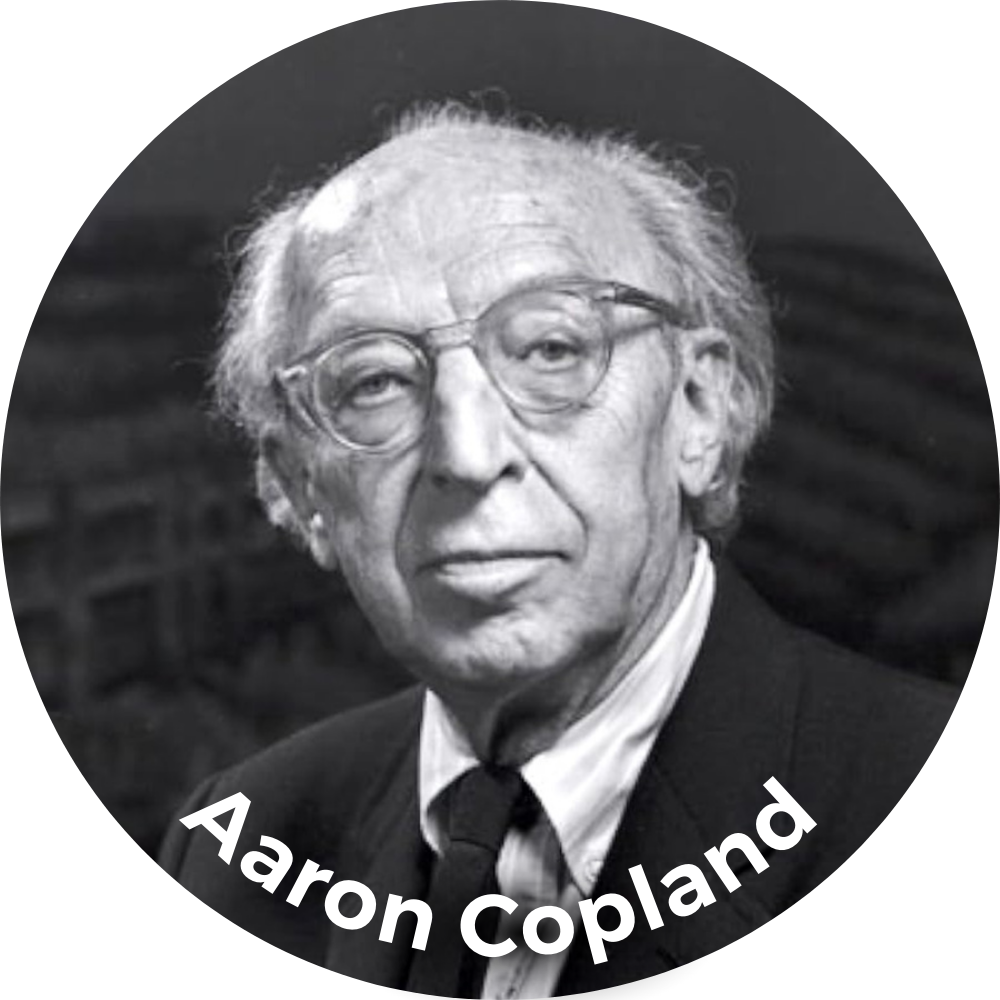
Aaron Copland’s Appalachian Spring stands as one of the most beloved works in American music. Originally composed in 1944 as a ballet for choreographer Martha Graham, the piece evokes the spirit of early American life through music that is open, spacious, and unmistakably Copland in character. This performance uses the original chamber version for 13 instruments, which offers a uniquely intimate view of the score.
The ballet tells a simple story of a young couple beginning their life together in a rural Pennsylvania community. Copland’s music reflects that simplicity, alternating between moments of quiet reflection and lively dance. Clear textures and folk‑inspired melodies create a sense of openness, optimism, and gentle strength.
Near the end of the work appears the Shaker tune “Simple Gifts,” presented with unassuming grace and gradually transformed through a series of variations. The melody becomes a symbol of humility and inner peace, growing richer while remaining true to its plainspoken origins.
The chamber instrumentation allows every musical line to be heard clearly, creating a feeling of closeness between performers and audience. Appalachian Spring brings the program to a thoughtful and hopeful close, celebrating community, renewal, and the enduring power of simple, honest music.
The THSO welcomes Dee Reed to narrate select poems by Langston Hughes to accompany the performance of Valerie Coleman’s Portraits of Langston.

Dee Reed, Narrator
After a career in higher education, Dee Reed retired from Saint Mary-of-the-Woods College. During her tenure, she led strategic marketing and communications, as well as the diversity, equity and inclusion initiatives. Dee applies her professional experiences to the boards of several local organizations. These include Art Spaces, City of Terre Haute Human Relations Commission, Lost Creek Restoration and Preservation Foundation, Second Missionary Baptist Church, and the Vigo County History Center.
Additionally, her true passion focuses on preserving and documenting the history of the Lost Creek Settlement ensuring its stories are accessible for future generations.
Poems by Langston Hughes read during Portraits of Langston by Valerie Coleman
I. Helen Keller
She,
In the dark,
Found light
Brighter than many ever see.
She,
Within herself,
Found loveliness,
Through the soul’s own mastery.
And now the world receives
From her dower:
The message of the strength
Of inner power.
II. Danse Africaine
The low beating of the tom-toms,
The slow beating of the tom-toms,
Low . . . slow
Slow . . . low —
Stirs your blood.
Dance!
A night-veiled girl
Whirls softly into a
Circle of light.
Whirls softly . . . slowly,
Like a wisp of smoke around the fire —
And the tom-toms beat,
And the tom-toms beat,
And the low beating of the tom-toms
Stirs your blood
III. Le Grande Duc Mambo
One night there was a terrific fight in the Grand Duc.
It began like this: a little French danseuse named Annette was going to have a child.
Feeling badly, no doubt, Annette began to be very spiteful to those clients who didn’t think that they could afford another bottle of champagne, so one night the owner of the place asked her not to come back anymore. He called an attendant to eject her. Annette would not go. The attendant laid hands on her and pushed her, struggling in her satin evening gown, toward the door.
As she passed the last table, Annette seized a patron’s champagne bucket—ice, bottle, and all—and flung it straight at the proprietor at his cash desk behind the bar; whereupon the attendant slapped Annette to the floor with one blow of his hand.
Then it was that Florence, the famous entertainer, that same Florence who snubbed millionaires nightly, arose from her table near the orchestra to defend the poor little French danseuse in her troubles. Florence wore an evening gown of gold and a spray of orchids in her hair. She swept across the floor like a handsome tigress, blocking the path of the waiters, who, at the bidding of the management, rushed to eject the little danseuse.
Florence said: “Don’t touch that woman! She’s a woman and I’m a woman, and can’t nobody hit a woman in any place where I work! Don’t put your hands on that woman.”
By that time the little danseuse had risen from the floor and seized another ice bucket, which she sent whirling into space. Customers dodged behind tables. The orchestra struck up “Tuck me to sleep in my Old Kentucky Home,” to drown out the noise.
A waiter did lay hands on the danseuse, but Florence laid hands on the waiter. Then the Negro manager laid hands on Florence, and a battle royal began between the women (and those who sided with the women) and the management (and those who sided with the men).
IV. Silver Rain
“In Time of Silver Rain”
In time of silver rain
The earth puts forth new life again,
Green grasses grow
And flowers lift their heads,
And over all the plain
The wonder spreads
Of Life,
Of Life,
Of life!
In time of silver rain
The butterflies lift silken wings
To catch a rainbow cry,
And trees put forth new leaves to sing
In joy beneath the sky
As down the roadway
Passing boys and girls
Go singing, too,
In time of silver rain When spring
And life
Are new.
VI. Harlem’s Summer Night
“Summer Night”
The sounds
Of the Harlem night
Drop one by one into stillness.
The last player-piano is closed.
The last victrola ceases with the
“Jazz Boy Blues.”
The last crying baby sleeps
And the night becomes
Still as a whispering heartbeat.
I toss
Without rest in the darkness,
Weary as the tired night,
My soul
Empty as the silence,
Empty with a vague,
Aching emptiness,
Desiring,
Needing someone,
Something.
I toss without rest
In the darkness
Until the new dawn,
Wan and pale,
Descends like a white mist
Into the court-yard.