
The Barnes Era, Part 2 (1962-1970)
David Chapman | July 10, 2026 | history@thso.org
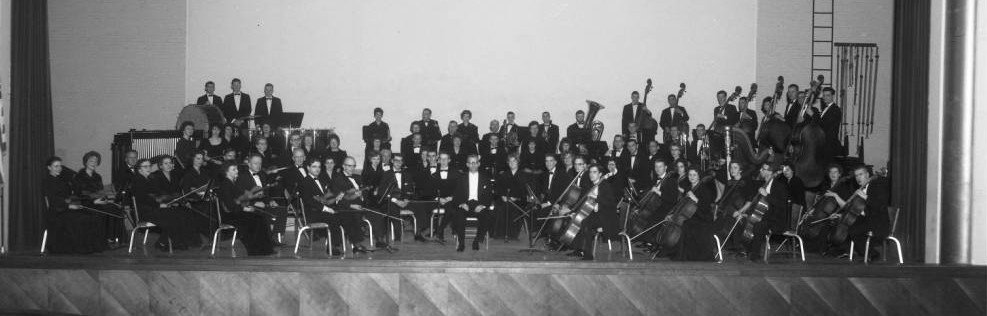
Photo of the Terre Haute Symphony Orchestra from March 7, 1962. As always, be sure to click on the photo above to be taken to the photo in the ISU catalog: there you can zoom and see much more detail! Courtesy of Indiana State University Special Collections.
Throughout its history, the Terre Haute Symphony Orchestra has been connected in fascinating ways to larger currents in American cultural life. The 1960s were no different. In this post we encounter three episodes from the Sixties: a modern dance pioneer whose appearance was overshadowed by national tragedy, an African American singer at the height of his fame, and a jazz legend taking a surprising turn toward sacred “classical” composition. Taken together, these episodes reveal an orchestra increasingly engaged with cultural developments far beyond the Wabash Valley.
Ethel Winter, interrupted (1963)
In November 1963, the THSA prepared to welcome the Ethel Winter Dance Group for a performance at Tirey Hall. This was another of the non-THSO events that had become common following the THSA/CMA merger. Ethel Winter was an elite member of the Martha Graham Dance Company, even taking over some of the roles that Graham herself had originally performed, and since the early 1950s had been a professor of dance at Juilliard. Terre Haute newspapers ran their regular promotional articles during the week before her visit, hoping to entice the community to come and enjoy modern dance of the highest order in their own hometown.
“Ethel Winter Dancers Here for Symphony”
Margaret Beecher, ever the local arts prophet, quoted U.S. President John F. Kennedy in her preview of the event, contrasting Kennedy’s aspirational view of American artistic freedom with Soviet state control of the arts. “In serving his vision of the truth,” Beecher quoted JFK as saying, “the artist best serves his nation.” The President and First Lady had been outspoken advocates for artists and performers of all kinds in what seemed to be an American cultural renaissance after decades of austerity, rationing, and postwar rebuilding. Beecher had cited the Kennedys for several years, locating the recent growth of the Terre Haute arts community squarely within that broader national movement. According to her, the Barnes-era expansion of the THSO stood right alongside noteworthy events like the opening of Lincoln Center in New York and the campaign to create a new National Cultural Center in Washington, D.C. (The THSA had even participated in local fundraising efforts for the new National Center!) “One gets almost goose-bumpy at the very idea of this country undergoing such a cultural resurrection,” Beecher had written in the Tribune-Star the previous October.
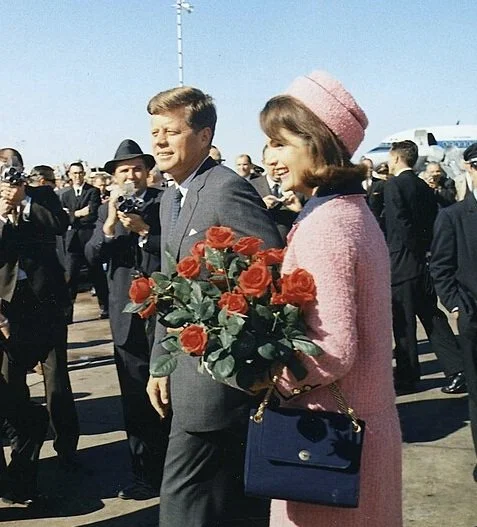
John and Jackie Kennedy on the morning of November 22, 1963. Public Domain. From Wikipedia.
However, on the morning of Friday, November 22, 1963, Kennedy was assassinated in broad daylight while waving to crowds from an open convertible in Dallas, Texas. The images and stories of that event still haunt us today, even those of us who are too young to have experienced it directly. Grief during a national tragedy carries manifold meanings, ranging from the broadly national to the profoundly personal. The tragedy of JFK’s death was felt in a particular way by those working in the arts. Artists and performers of all stripes now faced the question: how should the arts respond to the televised murder of their most visible champion? It was not simply a matter of commenting on the tragedy, but rather a decision about whether and how to continue performing in the immediate aftermath.
For the THSA, the question was whether the Ethel Winter event itself ought to go on. Performing arts organizations around the country answered such questions differently. Some, like the Met Opera and most of the theaters on Broadway, canceled their performances and darkened their marquee lights, while others, like the Boston Symphony and the New York Philharmonic, turned concerts into memorial events. On November 23, the Terre Haute Tribune ran an article suggesting that the Ethel Winter performance the next day would indeed still be held: “It has been announced that due to the nature of the event, that it has not been canceled and will be held as scheduled.” It is not clear what was meant by “the nature of the event.” Perhaps it was because these performers were from out of town and less likely to return if postponed, or because the tone of their event was sufficiently sober that it would suit the mood. Whatever the reason, the decision the day before the event was to go on.
“This will be our reply to violence: to make music more intensely, more beautifully, more devotedly than ever before.”
However, the performance was ultimately canceled. In a letter published afterward in both the Star and the Tribune, Jim Barnes and Rev. William Stineman, president of the THSA Board, wrote the following note to their audience:
The Terre Haute Symphony Association wishes to express its genuine respect for the consciences of its subscribers who elected to forgo attendance at last Saturday night’s presentation of the Ethel Winter Dance Group. This gesture was voluntarily made out of deference to the bereavement of the entire nation and the immediate family of President John F. Kennedy, who was undoubtedly an ardent advocate of the furtherance of learning and culture in America through the endeavors of the performing arts.
The Ethel Winter Dance Group thanks all Symphony subscribers for understanding that its inability to perform as scheduled on November 23rd arose from its saddened heart at the loss of President Kennedy. The management of the Dance Group sincerely appreciates the forbearance of all who may have felt deprived or inconvenienced because of the Dance Company’s cancellation of its appearance on Saturday night.
The Terre Haute Symphony Association shall continue its cultural pursuits for the entire Wabash Valley area in the spirit and enthusiasm with which Mr. Kennedy would wish it to work. This is the greatest tribute that can be paid to the departed: to carry on in his physical absence, as he would so thoroughly urge it to do for the greater love and advancement of culture in America and in the Wabash Valley.
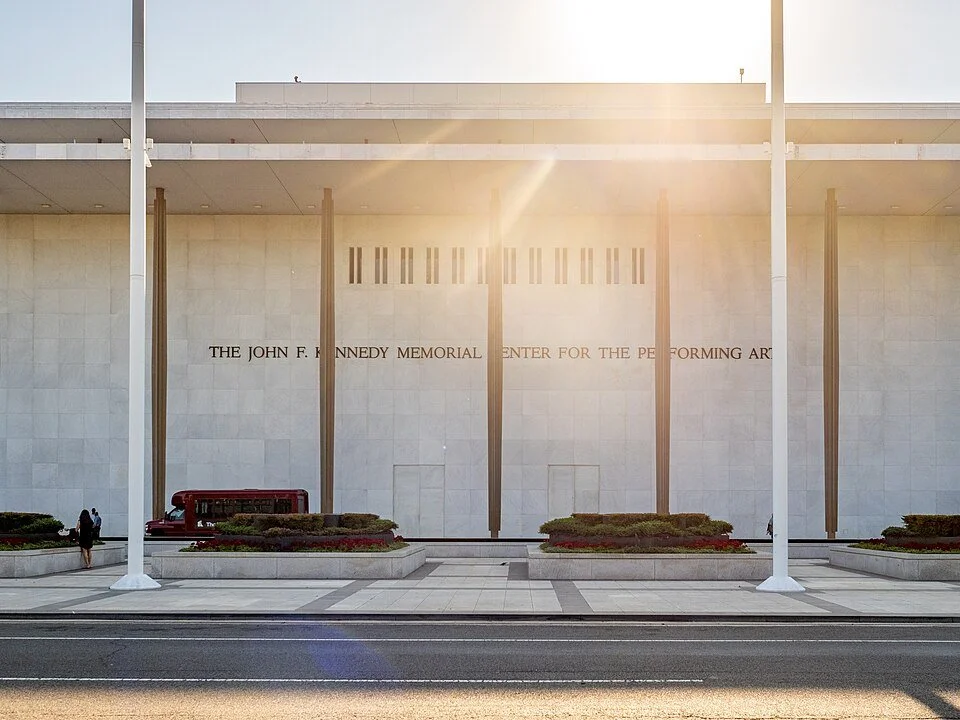
Thousands of tributes like these, large and small, emerged in the days following Kennedy’s death. Among them included proposals to rename the National Cultural Center as a living and enduring memorial to the fallen President. It would take nearly a decade to finish the fundraising and construction of the new Kennedy Center. When the building finally opened in 1971, designers affixed the name of the slain president to its eastern façade, a quiet dedication to America’s champion of artistic freedom and flourishing. His advocacy for the arts had inspired so many across the nation – reaching even a humble orchestra association in the Heartland, on the banks of the Wabash, far away from New York or D.C.
William Warfield (1966 and 1968)
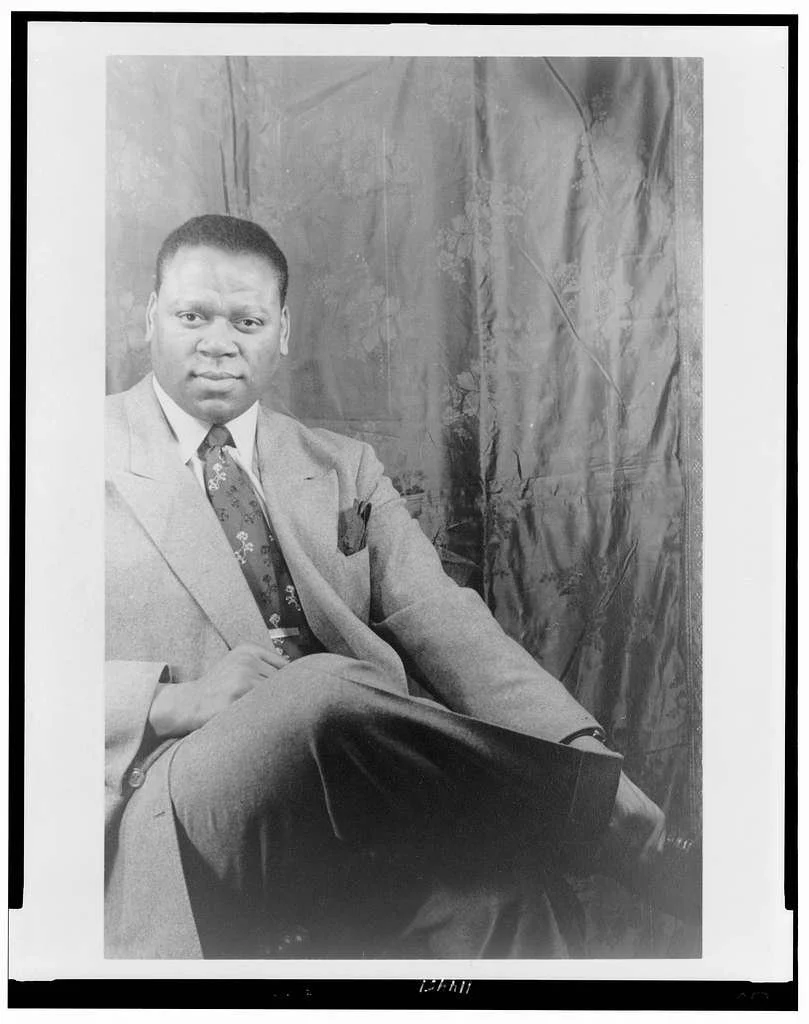
Carl Van Vechten’s 1951 photograph of William Warfield. Public domain. From LOC.gov.
In January 1966, singer William Warfield performed as guest artist with the THSO. Warfield was a conservatory-trained bass-baritone who became famous playing the stevedore Joe in the 1951 musical film Show Boat. The role led to numerous stage and television appearances for Warfield, very often featuring the character’s main song, “Ol’ Man River.” In classical circles, Warfield had made his reputation in a widely praised debut recital at New York’s Town Hall in 1950. Then, in 1952, he represented American arts abroad in a U.S.-sponsored European tour of Gershwin’s Porgy and Bess, playing one of the title roles opposite superstar soprano Leontyne Price, whom he later married. He also premiered both of Aaron Copland’s Old American Songs sets in 1955 and 1958, respectively, and later recorded them. In the 1960s, Warfield’s performances of arias from Mussorgsky’s Boris Godunov seemed to suit his voice especially and garnered him considerable critical praise. In 1963, Indiana State College hosted Warfield for a solo recital as part of its convocation series, making an lasting impression on the Terre Haute music community, and likely inspiring an invitation by ISC faculty member Jim Barnes to perform as guest artist with the THSO. And, in November of that same year, Warfield sang the solo bass part to Mozart’s Requiem at Chicago Symphony Orchestra’s memorial concert for JFK.
At his THSO concert in 1966, he performed three scenes from Boris Godunov and two from Porgy and Bess. Frederick Black, writing in the Terre Haute Star afterward, observed that Warfield’s voice seemed weaker than it had at his ISC recital several years before. (Many years later, Warfield wrote in his autobiography about the unfortunate decline of his voice starting around 1962, and this is likely what Black heard and documented in his review.) Black was otherwise enthusiastic in his review: “Mr. Warfield probably possesses as magnificent a voice as any singer appearing before the public today. It is rich in color, broad in range and commanding in volume. More than merely possessing a great voice, he employs that mighty instrument with great skill and musicianship.”
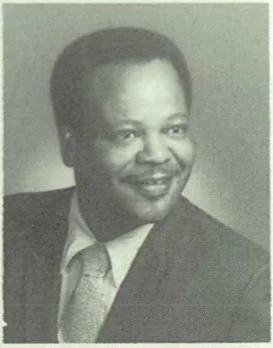
Portrait of Jack Romby, from the 1973 Northerner yearbook of Indianapolis’s North Central High School.
Although it was rare for the THSO to feature an African American performer as guest artist, Warfield was not the first. That distinction belonged to Terre Haute’s own Jack Romby, who appeared with the THSO in April 1956. Cordoza “Jack” Romby, originally from Louisiana, had been a cadet and mechanic at the legendary Tuskegee Air Force Base during the War, singing baritone with the cadet chorus. After the war he became music director of Terre Haute’s Second Baptist Church, performing in recitals and services around town throughout the next decade, including with the church choir at Centenary Methodist Church, where Barnes was music director. That same year, Romby appeared with the THSO, performing songs by Handel, Gershwin, and Vincent Youmans. Romby’s race went unremarked in the local Terre Haute press, but was noted in the Indianapolis Recorder, one of the oldest African American newspapers in the country: in its New Year’s retrospective on the year 1956, it noted “the appearance of Jack Romby with the Terre Haute Symphony Orchestra, the first Negro so honored.” Warfield, as far as I can tell, was the second, a decade later. And he was certainly not the last.
Warfield returned to the THSO for a second appearance in 1968, performing a collection of opera arias by Verdi, Rossini, Tchaikovsky, and Dello Joio, along with Copland’s first set of Old American Songs that were by then firmly associated with him in music history. As an encore, Warfield sang “Ol’ Man River.” John Christie wrote afterward in the Tribune: “The soloist, in his accomplishments of the evening, exemplified the adage that for the artist, eternal youth is suspended growth. Mr. Warfield is growing all the time. Everyone who attended the concert should feel privileged at living in his era, which is always now.”
POSTSCRIPT: After his two Barnes-era performances, Mr. Warfield returned to the THSO in 1999 to perform with David Bowden on the podium. His singing voice was mostly gone by then, but his speaking voice was still commanding and strong. He was often engaged by orchestras as narrator of Copland’s Lincoln Portrait, a role he had performed memorably with Leonard Bernstein years before and even won a Grammy for in 1984. This is the work that he performed with Bowden’s THSO in a concert entitled “The American Century.” More may be said about this visit later, but the visit puts a lovely punctuation mark on Warfield’s visits in the 1960s. The convergence of Warfield and Romby and Gershwin and Copland and Lincoln and Jim Barnes and David Bowden demonstrates the degree to which the stories recounted on this blog are uniquely and profoundly American stories.
Dave Brubeck (1969): personal reflections by the author
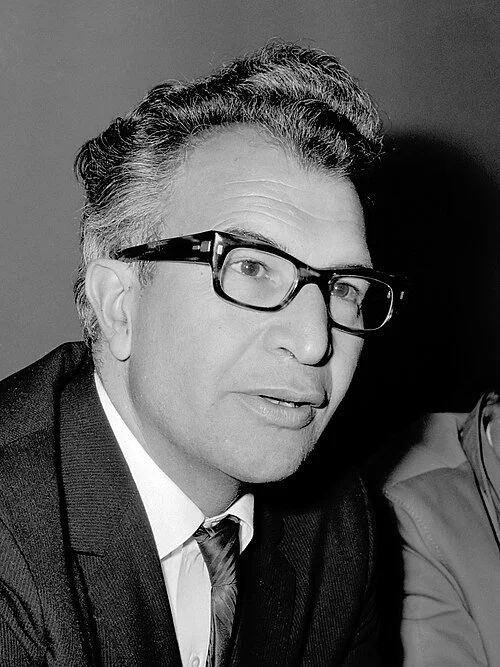
1964 portrait of Dave Brubeck by Jack de Nijs. CC BY-SA 3.0. From Wikipedia.
Soon after I became a member of the THSA board in 2021, conductor David Bowden brought to a meeting a newspaper clipping from the late 1960s. I saw something in it that astonished me: jazz legend Dave Brubeck had appeared with the THSO in April 1969 performing his The Light in the Wilderness oratorio with the THSO, accompanied by Indiana State’s University Singers and baritone singer Peter Schuetz. Brubeck had visited Terre Haute once or twice in prior years with his groundbreaking jazz quartet, and they were regulars at the summer jazz festivals in French Lick and Evansville. His collaboration with the THSO represented important cultural cross-currents. For Brubeck, it was evidence of a shift toward the classical world after making a name and good living for himself as a jazz musician. For the THSO, it reflected a broader embrace of jazz as a serious music, which might have surprised quite a few of its 1920s founders who thought of jazz as the opposite of the “good music” that orchestras ought to play. Thankfully, very little of that debate remains today.
Brubeck looms large in my own musical biography. My father, David Chapman Sr., is a jazz drummer who introduced me to Brubeck when I was very young. I remember magical days when Dad would set up his drumset in the living room and put on records at top volume and play along with them. As a kid, the sensory experience of it almost always set my siblings and me to jumping around and dancing — but this was inevitably interrupted by firm reminders that jumping around could cause the needle to skip and damage the vinyl. (Kids today have no idea…) Brubeck’s jazz albums, Time Out especially, made regular appearances at these sessions. I remember being especially impressed to hear that Dad had met him at the University of Georgia in the 1970s!
I attended Washington University in St. Louis for my Ph.D. studies from 2007 to 2013, and one of my classmates was the brilliant Kelsey Klotz. Her dissertation work focused on the “cool jazz” phenomenon in the 1950s, including the work of Brubeck. She later published an academic book entitled Dave Brubeck and the Performance of Whiteness, published by Oxford University Press. (She is now a member of the musicology faculty at the University of Maryland.) Because of my friend, I knew about Brubeck’s late-career turn – or, as she wrote in her book, a return – to so-called “serious” music and religious subjects. Although he was well-known as a jazz man by the mid-Sixties, he had begun his career two decades before as a somewhat conventional music student at Mills College, studying composition in a traditionally “classical” manner with Darius Milhaud. His The Light in the Wilderness oratorio, according to Klotz, “defined a new phase in his career. He was finally making good on a promise he made to Down Beat readers in 1953: that one day, he would return to classical composition full-time” (page 201).
Before Covid, I used to go to my colleague Terence Hartnett’s house every Monday night for late-night Irish-whiskey tasting and vinyl-record listening. Terence is a professor of English and theater in the HSSA department at Rose-Hulman. He and I started at Rose the same year and we were fast friends right from the start. At one of these whiskey-and-vinyl sessions, Terence refused to tell me the album he was putting on and wanted to see if I could guess it. What I heard was a choral work with orchestra in a mid-century, quasi-modernist aesthetic, with infusions of improvisatory-sounding post-bop jazz piano. I made a few incorrect guesses – I recall especially naming Bernstein and Milhaud – and then I remembered my classmate Kelsey’s work and asked, “Is it Dave Brubeck?!” Decency demands that I censor what my colleague called me in that moment — though in context it was entirely complimentary, I assure you. Then he flattered me further by saying “You just earned your Ph.D. again!” It was all thanks to Kelsey, if I’m honest, but I was not forthcoming with this information and only now is my secret revealed. The album was the 1968 Decca recording of Brubeck’s The Light in the Wilderness oratorio for choir, solo baritone voice, and orchestra.
The Light in the Wilderness is a quirky mélange of styles. John Christie, reviewing the 1968 THSO performance in the Tribune, described it as “a terribly, terribly serious choral work with soloist and jazz intervals played by a separate trio.”
The piece is eclectic in composition, that quality producing an absence of consistent total and formal character. The choral selections and their orchestral parts, for instance, are a bizarre assembly of several influences. One could pick out rhythmic figures reminiscent of Carl Orff, orchestral colorings which call Samuel Barber to mind, touches of Darius Milhaud (Mr. Brubeck’s mentor), and intervals which sounded like pieces composed as Conservatory exercises. The overall effect is the sense of a musical intelligence groping for a personality, of disparate elements creaking towards unified form. In essence, the major selections sound much like the music of a very young man.
Despite the reviewer’s misgivings, he also acknowledged that the work and its composer were well received by the crowd: “A large audience gave the performers a gracious hearing and a standing ovation.”
The most important fact about Brubeck’s visit, to me, is that it was Dave Brubeck. This should not be so surprising historically, given his frequent tours and concerts all over the world, and especially his generous appearances at colleges and universities of all stripes. Instead, it was significant to me because of my personal connections to him and my lifelong love for his music. And, in the context of this blog and its current focus on the Barnes-era growth of the THSO, it also once again reflects the rising caliber of guest artists during the 1960s.
Much more could be said about the THSO in the 1960s. These stories of Ethel Winter, William Warfield, and Dave Brubeck might appear unrelated, but together they reveal something important about the THSO during the 1960s. The orchestra was becoming more deeply connected to national artistic networks and cultural conversations. They were signs of an organization whose horizons were expanding right alongside those of American culture itself.
Guest appearances by Joseph Battista, Sigurd Rascher, Joseph Gingold, Sidney Harth, and so many more deserve notice. But the story of the THSO has also been one that is fundamentally local and oriented toward its community. Even as it increasingly served as a point of connection between the Wabash Valley and the wider artistic world, it remained rooted in Terre Haute.
I especially recommend to the reader several series of newspaper profiles of individual THSO musicians from this era. Copyright prevents me from simply publishing them in full here as I might wish to, but they are worth tracking down by interested readers. I have listed those articles in the source list below. These profiles remind the reader that some the brightest stars of the 1960s THSO were its own musicians.

.jpg)
.jpg)
If you enjoyed this post, consider supporting your hometown symphony with $100 for #THSO100 — a C-note for a Century!
Click here to donate.
THSO musician profile articles from the 1960s:
[Margaret Beecher and John Tillson], “Sketches of T.H. Symphony Personnel,” Terre Haute Tribune-Star, December 30, 1962, page 17.
[Margaret Beecher and John Tillson], “Sketches of T.H. Symphony,” Terre Haute Tribune-Star, January 6, 1963, pages 20 and 22.
[Margaret Beecher and John Tillson], “Sketches of T.H. Symphony,” Terre Haute Tribune-Star, January 13, 1963, page 40.
Jane Nattkemper, “Husband and Wife Team Appears in Orchestra,” Terre Haute Tribune-Star, October 10, 1965, page 48.
“Local Symphony Musicians Speaks of Trombone,” Terre Haute Tribune-Star, October 24, 1965, page 24.
Jane Nattkemper, “Symphony’s First Cellist is Exceptional Musician,” Terre Haute Tribune-Star, November 7, 1965, page 24.
Jane Nattkemper, “Wayne Cook Leads Trumpets in Symphony,” Terre Haute Tribune-Star, November 14, 1965, page 34.
Jane Nattkemper, “Mother and Daughter are Musicians with Symphony,” Terre Haute Tribune-Star, November 21, 1965, page 44.
Jane Nattkemper, “Symphony’s Concertmaster Leads String with Style,” Terre Haute Tribune-Star, December 12, 1965, page 43.
Jane Nattkemper, “Symphony’s Harry Gee Plays with Artistry,” Terre Haute Tribune-Star, December 19, 1965, page 42.
Jane Nattkemper, “Symphony’s First Flutist is Talented Jane Adams,” Terre Haute Tribune-Star, January 16, 1966, page 22.
Margaret M. Beecher, “Terre Haute Symphony Welcome New First Flutist,” Terre Haute Tribune-Star, September 25, 1966, page 36.
Margaret M. Beecher, “The Symphony Spotlight,” Terre Haute Tribune-Star, October 2, 1966, page 40.
Margaret M. Beecher, “The Symphony Spotlight,” Terre Haute Tribune-Star, October 9, 1966, page 46.
Margaret M. Beecher, “The Symphony Spotlight,” Terre Haute Tribune-Star, October 16, 1966, page 45.
Margaret M. Beecher, “The Symphony Spotlight,” Terre Haute Tribune-Star, October 23, 1966, page unknown.
Margaret M. Beecher, “The Symphony Spotlight,” Terre Haute Tribune-Star, October 30, 1966, page 43.
Margaret M. Beecher, “The Symphony Spotlight,” Terre Haute Tribune-Star, November 6, 1967, page 37.
Margaret M. Beecher, “The Symphony Spotlight,” Terre Haute Tribune-Star, September 22, 1968, page 42.
Margaret M. Beecher, “The Symphony Spotlight,” Terre Haute Tribune-Star, September 29, 1968, page unknown.
Margaret M. Beecher, “The Symphony Spotlight,” Terre Haute Tribune-Star, October 6, 1968, page 39.
Margaret M. Beecher, “The Symphony Spotlight,” Terre Haute Tribune-Star, October 13, 1968, page 41.
Sources on the canceled Ethel Winter Dance Company appearance:
Margaret M. Beecher, “Need for Fine Arts Council in Wabash Valley Cited,” Terre Haute Tribune, November 21, 1963, page 16.
“Symphony Series Second Feature is Set Saturday,” Terre Haute Star, November 22, 1963, page 8.
“Ethel Winters Group Appearing Saturday Night,” Terre Haute Tribune, November 22, 1963, page 10.
“Ethel Winter Dancers Here for Symphony,” Terre Haute Tribune, November 23, 1963, page 10.
[Letter to the editor by Dr. James Barnes and Rev. William F. Stineman], Terre Haute Star, November 25, 1963, page 16.
[Letter to the editor by Dr. James Barnes and Rev. William F. Stineman], Terre Haute Tribune, November 25, 1963, page 5.
Sources on William Warfield’s appearances with the THSO:
“William Warfield Soloist for Third Symphony Concert,” Terre Haute Tribune-Star, January 2, 1966, page 28.
“William Warfield Soloist with TH Symphony Jan. 11,” Terre Haute Saturday Spectator, January 8, 1966, page 15.
“William Warfield to Appear with Terre Haute Symphony,” Terre Haute Tribune-Star, January, 1966, page 17.
“William Warfield to Sing at TH Symphony Tonight,” Terre Haute Star, January 11, 1966, page 6.
Frederick Black, “Singer William Warfield Delights Music Patrons,” Terre Haute Star, January 12, 1966, page 3.
“William Warfield to Appear with Local Symphony,” Terre Haute Tribune, April 16, 1968, page 26.
“Terre Haute Symphony Presents William Warfield,” Terre Haute Saturday Spectator, April 20, 1968, page 16.
“Noted Vocalist to Appear Here with Symphony,” Terre Haute Tribune-Star, April 21, 1968, page 22.
“William Warfield Concert Guest,” Terre Haute Tribune, April 23, 1968, page 3.
John Christie, “William Warfield Delights Patrons of the Symphony,” Terre Haute Tribune, April 25, 1968, page 22.
Sources on Dave Brubeck’s appearance with the THSO:
“Dave Brubeck to Appear with T. H. Symphony April 23,” Terre Haute Tribune, April 11, 1969, page 9.
“82 Students to Appear with Brubeck,” Terre Haute Tribune, April 17, 1969, page 16.
“Terre Haute Symphony,” Terre Haute Saturday Spectator, April 19, 1969, page 16.
“Dave Brubeck to Appear with Local Symphony,” Terre Haute Tribune-Star, April 20, 1969, page 41.
“Dave Brubeck Plays Own Oratorio with Symphony,” Terre Haute Tribune, April 24, 1969, page 29.