
Will Bryant’s Final Bow (1949)
David Chapman | May 1, 2026 | history@thso.org
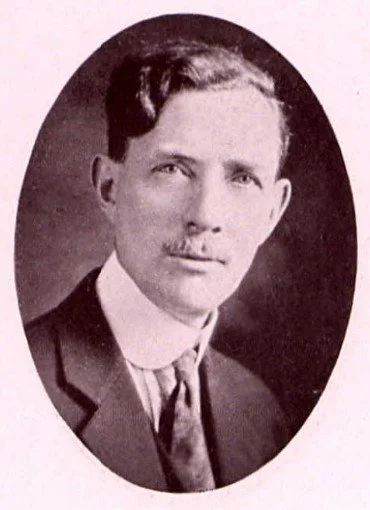
Portrait of Will Bryant from the 1924 Indiana State Sycamore yearbook.
William Henry Bryant, the THSO’s first conductor, was more than just a workaday musician. He was equal parts Johnny Appleseed, entrepreneur, and true believer. For Bryant, a new musical enterprise was always in the works and always being pursued with missionary zeal. That combination of energies made him an ideal founder for our orchestra, a tireless advocate during hard times, and a champion for sustaining the work long-term. And until David Bowden surpassed him around 2020, Bryant was also the longest serving conductor in THSO history, having been on the podium for 23 years. Today we trace his journey to that podium… and his final bow atop it.
Bryant Before the THSO
William Henry Bryant was a native Midwesterner, born in Ottawa, Illinois, in 1878 to an English immigrant glassworker named Charles and his wife Rosina (Barido). He began learning music very young, playing a mixture of strummed and bowed string instruments, especially the violin. By the time he was a teenager, he already played regularly in his church’s Sunday School orchestra and in the pit band at the local opera house. His formative years were spent apprenticed both to his father as a glass blower and windowpane cutter and to the opera house’s orchestra director. Glass work and music would become his primary sources of income in his early adult life.
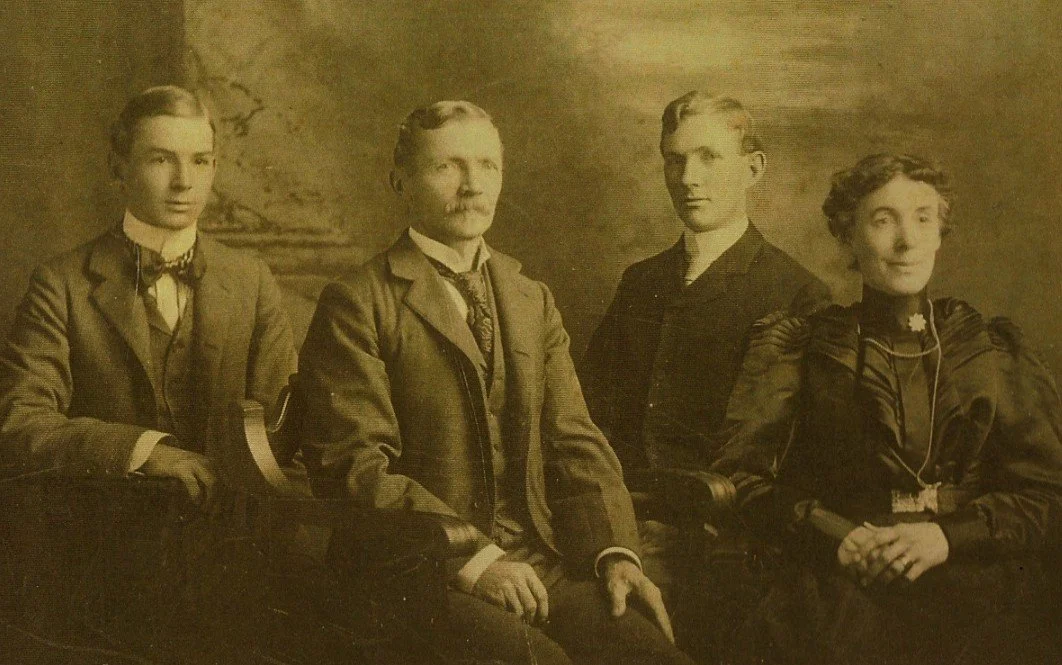
Paul (brother), Charles (father), Will, and Rosina (mother) Bryant, circa 1890s. Photo from private family archives. Used by permission of Marianne Bryant Wildcat, Paul’s granddaughter.
Around 1895, Bryant followed his orchestra director to Muncie, Indiana, where he began studies at the short-lived Eastern Indiana Normal School (a predecessor to Ball State University). He settled in nearby Anderson, which was just opening a new opera house of its own. Bryant soon became its orchestra director and shortly thereafter began teaching guitar and mandolin at Eastern Indiana Normal. In 1899 he founded the Columbian Mandolin Orchestra in Anderson and organized a concert band for the Union Traction Company, Anderson’s interurban railroad connecting Indianapolis to its northeastern region. And, all the while, he also continued his glass-making pursuits at the Anderson Glass Factory.
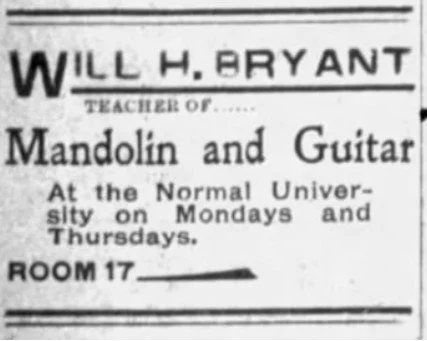
Advertisement published in the Muncie Morning News, September 9, 1899
In 1900, Will met Blanche Augustine Davies, daughter of the extraordinary Pauline Mariotte-Davies, a professor of French and Spanish languages at Purdue University and a radical activist in the settlement movement. Blanche had studied violin at the famed Paris Conservatory not long after Claude Debussy was a student there. In the latter years of the 19th century she had traveled around the Midwest as part of the Chautauqua movement, performing as a featured soloist. Will and Blanche shared passions for education and for music. They married on October 17 in Tippecanoe, and their only son, Selwyn, was born two years later.
The Bryants moved from Anderson to Vincennes in late summer 1904, when Will took a teaching position at Vincennes College (now Vincennes University). While there, he became director of that city’s opera house, led the first regimental band of the Indiana National Guard, and taught private lessons out of his home studio. And, for all that musical hustling and gig-work, he was still listed in city directories as a “glass cutter,” like his father.
“TO OLD VINCENNES: Mr. and Mrs. Will Bryant left for Vincennes, Ind., yesterday, where Mr. Bryant has accepted a position as instrumental music teacher in the Vincennes College. He will also have charge of the opera house orchestra.”
The Vincennes position did not last long, and by 1906 the Bryants were living in Indianapolis, where Will played and directed orchestras at the Lyric and Colonial Theaters. Bryant seems to have turned a professional corner at around this time, because city directories finally began referring to him as musician rather than as a glass worker. In 1909 Bryant played violin under director Victor Ila Clark for a group that called itself the Indianapolis Symphony Orchestra, a predecessor of the modern ISO (not unlike the THSO’s own predecessor orchestra!). This ISO folded after one season.
The family was on the move once again in 1911, and this time they finally arrived in Terre Haute. This was to be their home for the next four decades, though they could not have known it at the time. Bryant became head of music for the T. W. Barhydt and Company amusement group, directing theater orchestras at the Variety (later renamed Liberty) and the Hippodrome (later renamed Wabash and now the home of Scottish Rite). Throughout the 1910s, Bryant organized and advertised a Symphony Club, serving as an employment agency for connecting musicians with paid opportunities to play for events and organizations. He also set up a new private music studio, teaching lessons out of his home at 129 1/2 South Seventh Street, in the same building as Heinl’s Flower Shop (now J. Ford’s Black Angus steakhouse).
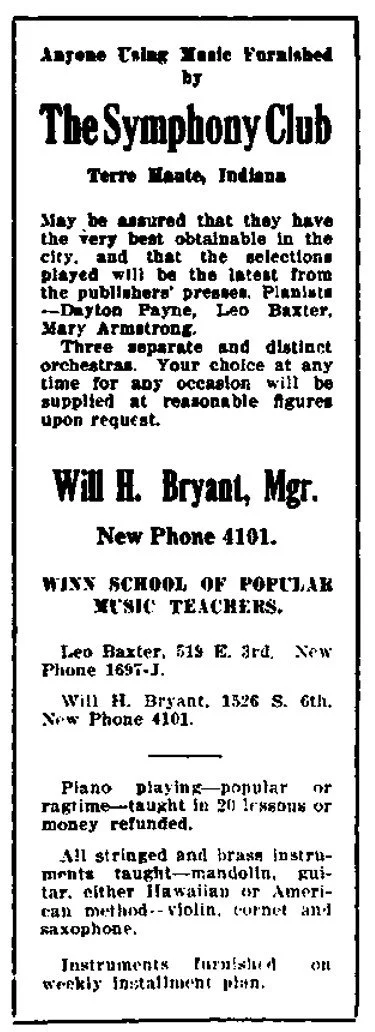
Advertisement in Terre Haute Saturday Spectator, October 9, 1915, page 6
In 1921, Bryant accepted a teaching position at Indiana State Teachers College and left theater work behind. (Barhydt, his now-former employer, was at that moment working on plans for the construction of the Indiana Theatre, soon to be the site of the THSO’s first concert!) Immediately after taking his new job, Bryant started a new student orchestra, which quickly became a significant part of campus culture. A few short years later, several of his colleagues in the local musicians union approached him about serving as conductor of a new civic orchestra… and the rest is THSO history!
Be sure to read the history of the THSO in the 1920s, 1930s, and 1940s in these posts:
“The THSO Begins (1926-1927)” (posted February 27)
“THSO in the Great Depression (1927-1934)”
“The TH(CTC)SO in WWII (1939-1945)” (posted April 17)
Bryant’s Service to the Profession
Soon after successfully launching the Terre Haute Symphony Orchestra in 1926, Bryant publicly advocated for the formation of new orchestras of all sizes and skill levels playing classical music in communities around Indiana and the Midwest. “It is not numbers,” he argued in the Anderson Daily Bulletin in 1928, “but lasting enthusiasm that makes symphony orchestras in small communities.” These communities might not have venues large enough to host full orchestras like Terre Haute’s then-fifty-plus ensemble. Smaller orchestras, tailored to local needs, meant more opportunities for audiences to hear live-performed, high-quality music.
Heeding his own advice, he announced the formation of yet another new ensemble in 1928, the “Indiana State Normal Little Symphony Orchestra,” whose aim would be “to give small communities near Terre Haute a chance to hear good music.” This announcement demonstrated Bryant’s dual mission at that time. As a college professor at Indiana State, he was necessarily focused on the performing needs of his music students. As the leader of the community-facing THSO, he was concerned with serving a public audience for symphonic music. Bryant’s newly proposed ensemble would have existed at the intersection of these concerns: “little” in comparison to the THSO, resembling his 25-member student orchestra in its size and residency within the college, but serving a public audience alongside the THSO. This new “Little Symphony Orchestra” in residence at Indiana State does not appear to have rehearsed or performed after this announcement in 1928. But it was yet more evidence of Bryant’s love for new musical ventures, and it was an early hint that the musical concerns of the college and city were merging at the end of the 1920s and would play a vital role in the orchestra’s future.
“Symphony Orchestra Organizing at Normal: Groups Will Play in Small Communities Near Terre Haute”
Bryant’s leadership in the region went far beyond teaching at Indiana State and directing the THCTCSO. It included becoming president of both the “In and About Indianapolis Music Club” and the Indiana State Teachers Association in the late 1930s, as well as the president of the Composer’s Guild of Indiana in the early 1940s. In 1942, he helped found and served as the first president of the Indiana Music Educators Association. For several years in the mid-1940s he himself served as head of the Indiana State music department. And somehow — somehow! — he also found time to compose music now and then, including several overtures that the THSO itself premiered.
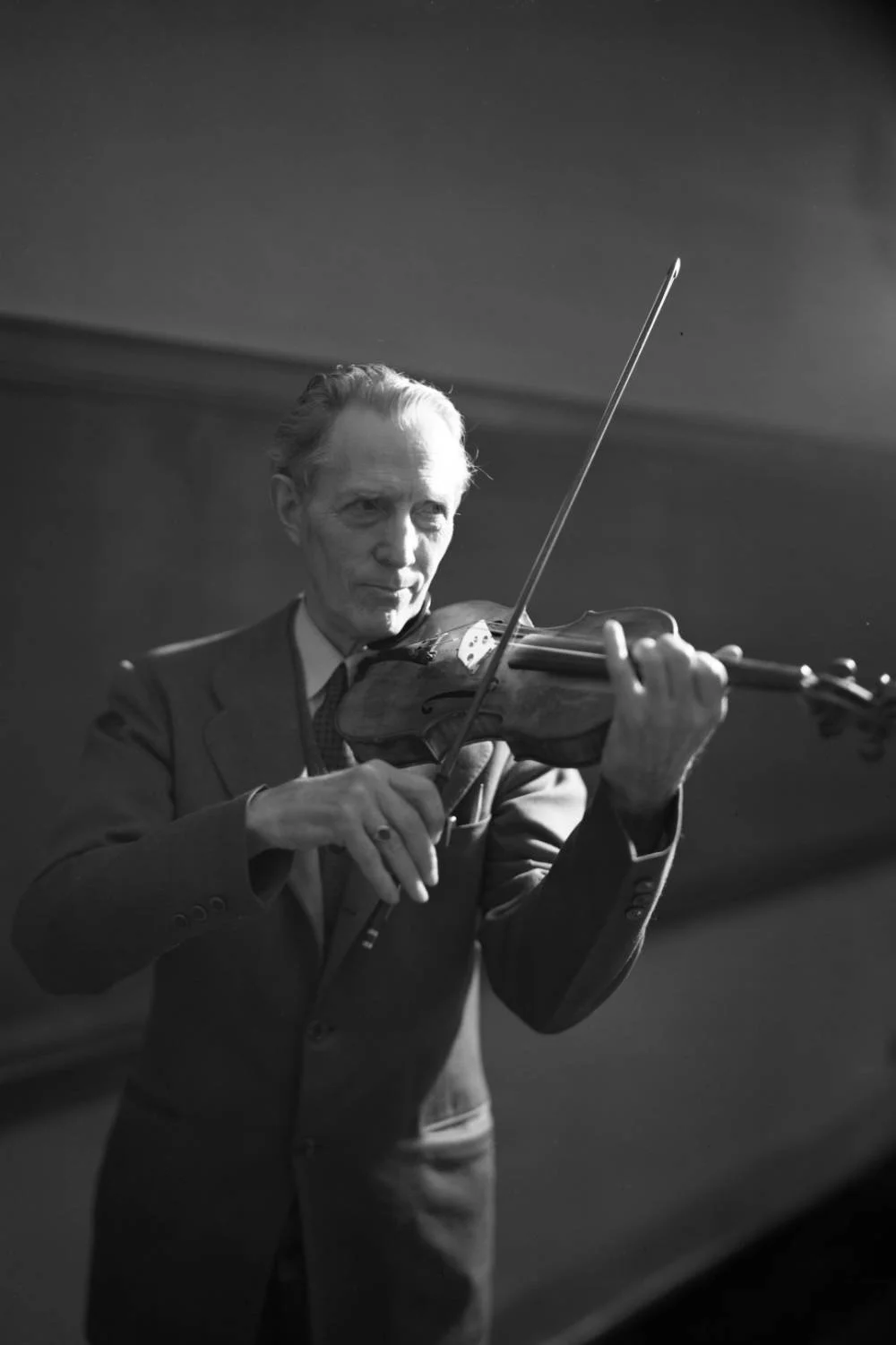
Portrait of Will Bryant from February 1944. Courtesy of Indiana State University Special Collections.
Bryant’s many years of service as professor of music at Indiana State ended in 1947 when he resigned after 26 years of teaching. He was awarded the title of Professor Emeritus by the college. It would seem to have been a welcome and much-deserved opportunity for a break after a lifetime of effort! And yet a local newspaper in Vincennes published an article in October 1948 with the following headline and instructions to contact Will H. Bryant of Terre Haute:
“Are Vincennes Musicians Interested in Organizing Symphony Orchestra, Query”
The man was relentless.
Bryant’s Final Bow
Time eventually caught up with Maestro Bryant. In late summer 1949, deep into the planning process for the orchestra’s 24th season (1949-1950), Bryant abruptly resigned from the THCTCSO. Instrumental parts were already being assembled, guest musicians had been invited, and rehearsals had been scheduled. The reasons given to the local media were that he had taken a new faculty position at Guilford College in Greensboro, North Carolina, and that he and Blanche were moving to be nearer to where his son, grandson, and great-grandson lived. Bryant was 71 years old and Blanche was 74, in poor health, and in need of constant care. Bryant and his son Selwyn had quietly spent the summer looking for a house in Greensboro to accommodate them all, so the change was less of a surprise to the Bryant family than it had been for the Terre Haute community.
“Prof. W. H. Bryant Leaves Friday to Take Post in North Carolina”
Other reasons became apparent shortly after their move. A few weeks into his new term at Guilford, Bryant was hospitalized and diagnosed with an advanced case of cancer, forcing him to resign from his new position. He underwent surgery in mid-October and was thought to be on the mend with a good prognosis. The Terre Haute Tribune shared several health updates throughout that autumn season.
“Death Takes Prof. Bryant”
Shortly after New Years Day 1950, however, Will Bryant died. Newspapers throughout North Carolina and Indiana ran stories noting his passing and commemorating his years of service to the region. Memorial headlines appeared in nearly all his former Hoosier hometowns: Muncie, Anderson, Indianapolis, and of course Terre Haute. On January 5, the Terre Haute Tribune described him as follows: “always courteous, always kind, he gave invaluable effort to the students of the college, and the news of his death yesterday, occasioned universal expression of regret.” The paper also ran a statement by Dr. Ralph Tirey, then-president of both Indiana State and the Terre Haute Symphony Orchestra Association, as well as Bryant’s close friend and colleague: “He gave great encouragement to any worthy young musician who aspired to play good music. He gave hundreds of music lessons for which he asked no pay. During the 23 years that he directed the orchestra, he never received any salary. The effects of this unselfish civic service will be felt in Terre Haute and Indiana for many years to come.”
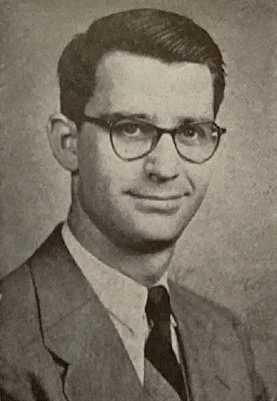
Portrait of James Barnes, second conductor of the TH(CTC)SO, published in a November 15, 1950, concert program.
The THCTCSO dedicated its next concert to Bryant’s memory. On January 24, 1950, the orchestra took the stage under the baton of Professor James Barnes, Bryant’s successor, in only his second concert in his new role. They performed Bach’s “Jesu, Joy of Man’s Desiring,” Haydn’s “Surprise” Symphony, Saint-Saens’ Concerto in G minor with guest pianist (and future IU piano professor) Joseph Rezits, and the triumphant “Great Gate of Kiev” from Mussorgsky’s Pictures at an Exhibition. Frederick Black reported in the Terre Haute Star the next day that “it was indeed a fitting tribute to the man who labored so untiringly in the organization and development of our local symphony.”
Bryant’s legacy continued to benefit others even after his passing. In the weeks after his death, his son raised a large sum of money from Greensboro business friends and donated it in his father’s memory to the National Cancer Research Fund. In 1951, Blanche Bryant donated her late husband’s massive personal library of orchestral scores and parts to the American Symphony Orchestra League, to be turned into a free loaning library for use by small orchestras all over the country. (It is unknown whether that library survives today or remains under his name.) And, of course, the Terre Haute [Civic and Teachers College] Symphony Orchestra endured to see its 25th and 50th anniversaries and more. Soon we will enjoy its 100th! All of these are testaments to his lifelong work in support of music, musicians, and the communities they serve.
“Memorial Musical Library Left by Prof. Will Bryant’s Bequest”
Will’s widow and wife of nearly 50 years, Blanche Davies Bryant, passed in 1954. They are buried together in the Mariotte-Davies (Blanche’s mother) vault at the Spring Vale Cemetery in Lafayette, Indiana.
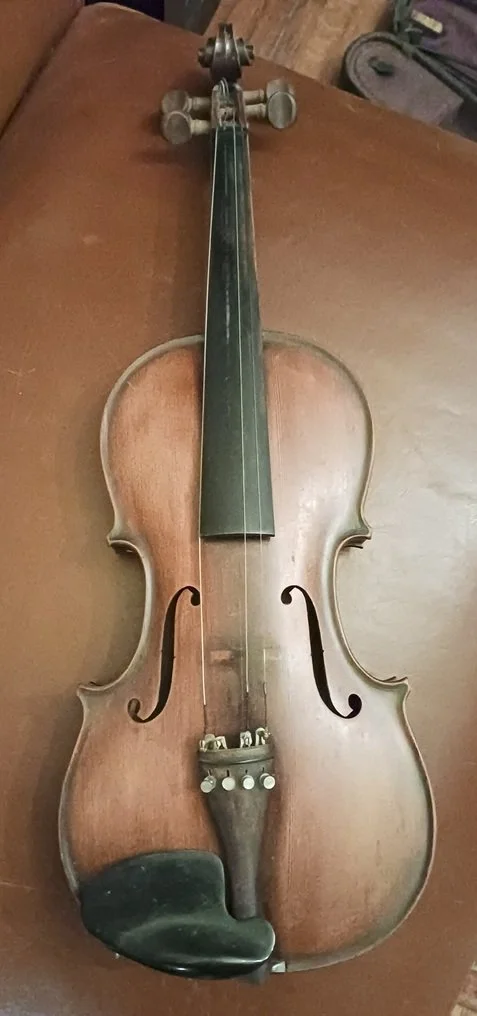
Will Bryant’s violin. Photo taken April 30, 2026, and shared by Marianne Bryant Wildcat (Will Bryant’s grandniece). Posted here with her permission.

If you enjoyed this post, consider supporting your hometown symphony with $100 for #THSO100 — a C-note for a Century!
Click here to donate.
Sources on Bryant’s work at Eastern Indiana Normal School:
“Additional Funds: Eastern Indiana Normal University Receives Support in the Sum of $15,000,” Muncie Daily Herald, July 8, 1899, page 8
“The University Faculty: Names of Those Who Will Teach as Now Arranged,” Muncie Evening Press, page 4.
“Much in Evidence: Muncie People Fill Prominent Positions at the Island Park Assembly,” Muncie Daily Herald, page 1.
“Dedication of University: Eastern Indiana Normal Formally Opened with Bright Prospects,” Muncie Evening Press, page 1.
“Muncie Normal School: New Institution Well Endowed and Ready for Business,” Indianapolis Journal, August 30, 1899, page 3.
Sources on Bryant’s work with the Union Traction Band in Anderson:
“Traction Company Has It’s Own Band,” Star Press [Muncie], June 6, 1899, page 16.
“Union Traction Band,” Muncie Evening Press, June 6, 1903, page 8.
“Concert: Will Be Given Tonight by the New U. T. Brass Band,” Anderson Herald, June 9, 1903, page 1.
“Union Traction Band,” Anderson Herald, June 11, 1903, page 2.
“Concert Tonight,” Anderson Herald, June 18, 1903, page 5.
Other sources:
“[Pauline Mariotte-Davies] Was Honored By the French,” Anderson Herald, June 14, 1904, page 1.
“Returns from Trip Abroad,” Anderson Herald, August 23, 1904, page 1.
“To Old Vincennes,” Anderson Herald, September 1, 1904, page 4.
“Orchestra Big Surprise: Gives Splendid Concert,” Indianapolis Star, December 13, 1909, page 5.
“Bryant to Conduct Symphony Concert,” Terre Haute Saturday Spectator, January 28, 1928, page 28.
“Bryant Advocates Symphony Groups,” Anderson Daily Bulletin, January 13, 1928, page 11.
“Prof. Bryant, Symphony Conductor, Leaving to Accept New Position,” Terre Haute Tribune, August 18, 1949, pages 1 and 9.
“Prof. W. H. Bryant Leaves Friday to Take Post in North Carolina,” Terre Haute Star, August 19, 1949, page 15.
“Terre Haute Symphony Orchestra Director Appointed By Board,” Terre Haute Tribune, September 11, 1949, page 40.
“Symphony Rehearses in Preparation for Season with New Conductor,” Terre Haute Tribune, October 2, 1949, page 25.
Sources on Bryant’s death:
“Personal Mention,” Terre Haute Tribune, October 13, 1949, page 8.
“Personal Mention,” Terre Haute Tribune, October 20, 1949, page 10.
“Death Takes Prof. Bryant,” Terre Haute Tribune, January 4, 1950, [unknown page number].
“W.H. Bryant, Music Expert, Dies in City,” Greensboro Record, January 4, 1950, page 13.
“Music Conductor Dies,” Hickory [N.C.] Daily Record, January 4, 1950, page 4.
“Professor Bryant,” and “Prof. Bryant Rites Friday,” Terre Haute Tribune, January 5, 1950, pages 4 and 5.
“Succumbs: Prof. Will Bryant Claimed by Death,” Terre Haute Star, January 5, 1950, page 1.
“Will H. Bryant,” News and Observer [Raleigh, N.C.], January 5, 1950, page 19.
“Former Music Teacher at College Succumbs,” Muncie Evening Press, January 5, 1950, page 9.
“Former Teacher of Music Succumbs,” Star Press [Muncie], January 5, 1950, page 3.
“Will H. Bryant,” Herald-Sun [Durham, N.C.], January 5, 1950, page 5.
“W.H. Bryant, Symphony Conductor,” Winston-Salem Journal, January 5, 1950, page 7.
“Ex-Guilford Teacher Dies,” Asheville Citizen-Times, January 5, 1950, page 10.
“Prof. Will H. Bryant,” Greensboro Record, January 5, 1950, page 24.
“Bryant Rites to be Held Friday,” News and Record [Greensboro], January 5, 1950, page 13.
“Will H. Bryant,” Terre Haute Saturday Spectator, January 7, 1950, page 14.
“Prof. W. H. Bryant,” Greensboro Daily News, January 7, 1950, page 16.
“Symphony Orchestra Concert Next Tuesday Dedicated to Bryant,” Terre Haute Star, January 19, 1950, page 16.
Frederick Black, “Symphony Program is Well Received,” Terre Haute Star, January 25, 1950, page 9.
“Memorial Musical Library Left By Prof. Will Bryant’s Bequest,” Terre Haute Tribune, September 2, 1951, page 20.
“Blanche Bryant, Widow of I.S.T.C. Professor, Dies,” Terre Haute Tribune, page 11.